Computer vision
for the physical world.
Foveo turns any camera into a real-time sensor. Detect, classify, segment, track, and read objects with production accuracy — deployed at the edge or in the cloud, in days not quarters.
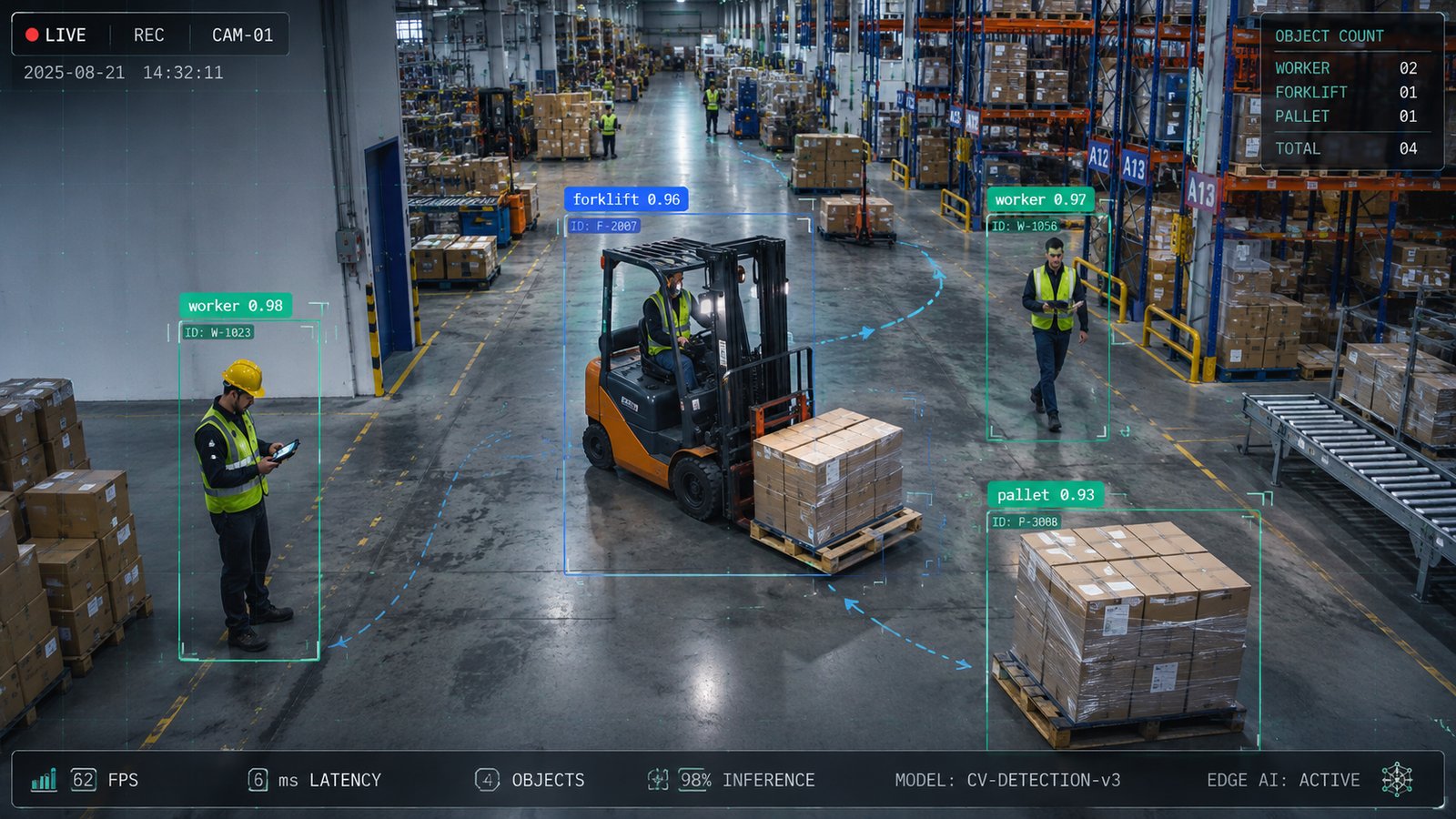
Interactive preview · switch modes above · drop your own scene to overlay detections
What is computer vision?
Computer vision is the branch of artificial intelligence that teaches machines to interpret images and video the way people do — finding, classifying, locating, and tracking objects inside visual data.
Foveo packages that capability into a deployable platform: connect a camera, choose a task, and turn raw pixels into structured, queryable events your systems can act on — in real time.
Object Detection
Locate and classify every object in a frame with bounding boxes and confidence scores.
Segmentation
Pixel-perfect instance and semantic masks for measurement, counting, and area analysis.
Multi-Object Tracking
Persistent IDs across frames for flow, dwell time, speed, and trajectory analytics.
OCR & Document AI
Read labels, serials, and forms from any surface — printed, embossed, or handwritten.
Anomaly & Defect
Catch surface defects and rare events with one-class and few-shot anomaly models.
Pose & Activity
Estimate body and object pose to recognize actions, ergonomics, and safety violations.
From pixels to production in four steps
What could automated vision return?
Drag the sliders to your reality. It's a rough model — we'll build a precise one on your real numbers during a demo.
Illustrative model — assumes ~70% inspection-labor reallocation and ~90% fewer escaped defects over 260 working days. Your real figures will differ.
Built for teams that run on cameras
Northwind Components cut escaped defects by 94% with automated visual inspection
A single Foveo edge node inspects 1,200 parts per minute across three lines, flagging surface defects human inspectors missed — and learning from every correction.
Read the case study →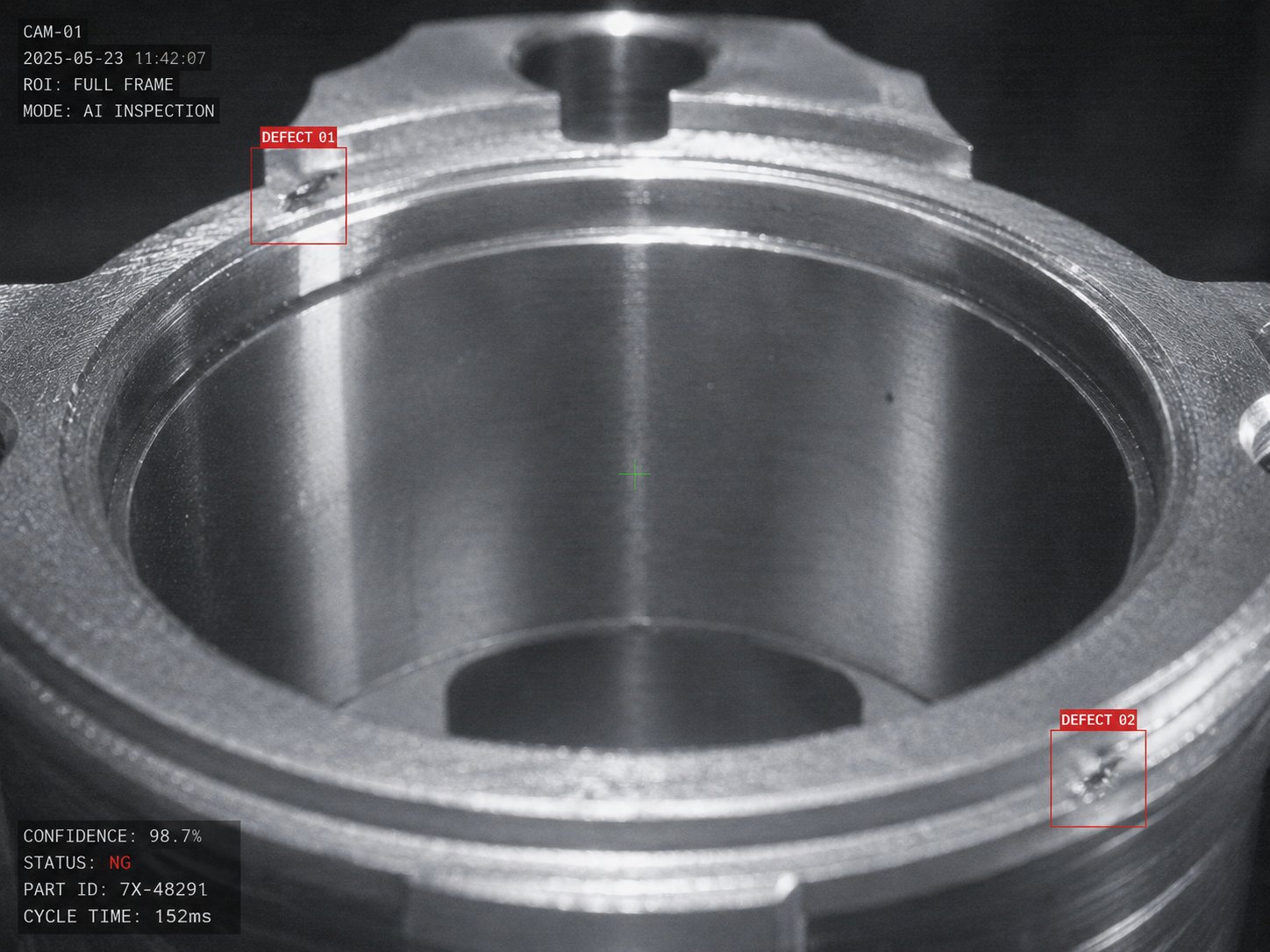
Teams that stopped guessing
Foveo had a working defect model running on our own line footage inside the first week. That simply never happens with vision projects.
We stopped debating whether vision could work and started measuring how much it saved. Payback landed inside a single quarter.
They understood our floor, not just the model. The camera-placement guidance alone was worth the engagement.
Computer vision, answered
What is computer vision?+
Computer vision is a field of artificial intelligence that trains machines to interpret images and video the way humans do — detecting, classifying, locating, and tracking objects in visual data. Foveo packages this into a deployable platform so any camera becomes a real-time sensor.
What can the Foveo platform detect?+
Foveo supports object detection, instance and semantic segmentation, multi-object tracking, OCR and document parsing, anomaly and defect detection, pose estimation, and counting — across manufacturing, retail, logistics, security, agriculture, and healthcare.
Does Foveo run on the edge or in the cloud?+
Both. Foveo models run on-device at the edge for sub-10ms latency and offline operation, or in the cloud for elastic batch processing. The same model artifact deploys to either target with no code changes.
How accurate is Foveo's object detection?+
Production deployments typically reach 95–99% precision after a short fine-tuning loop on customer data. Accuracy depends on use case, camera placement, and labeled examples; Foveo's active-learning pipeline improves models continuously from live feedback.
How long does it take to deploy a model?+
Most teams ship a first working model in 2–4 weeks using pre-trained backbones and Foveo Model Studio. Custom use cases with new object classes take longer depending on data availability.